Visual World
The grid, the architecture, the doors, and the Diorama they all belong to.
BrowserPod’s imagery is a single coherent world, not a mood board. Every scene is built from the same few motifs, and every motif maps to something true about the product. When you know the mapping, you can compose new scenes that belong.
The grid
A fine grey grid on black void, running behind, beneath and through everything. The grid is the BrowserPod kernel layer, the thing that holds the world up. It appears wherever the world opens: skies, doorways, the space beyond arches.
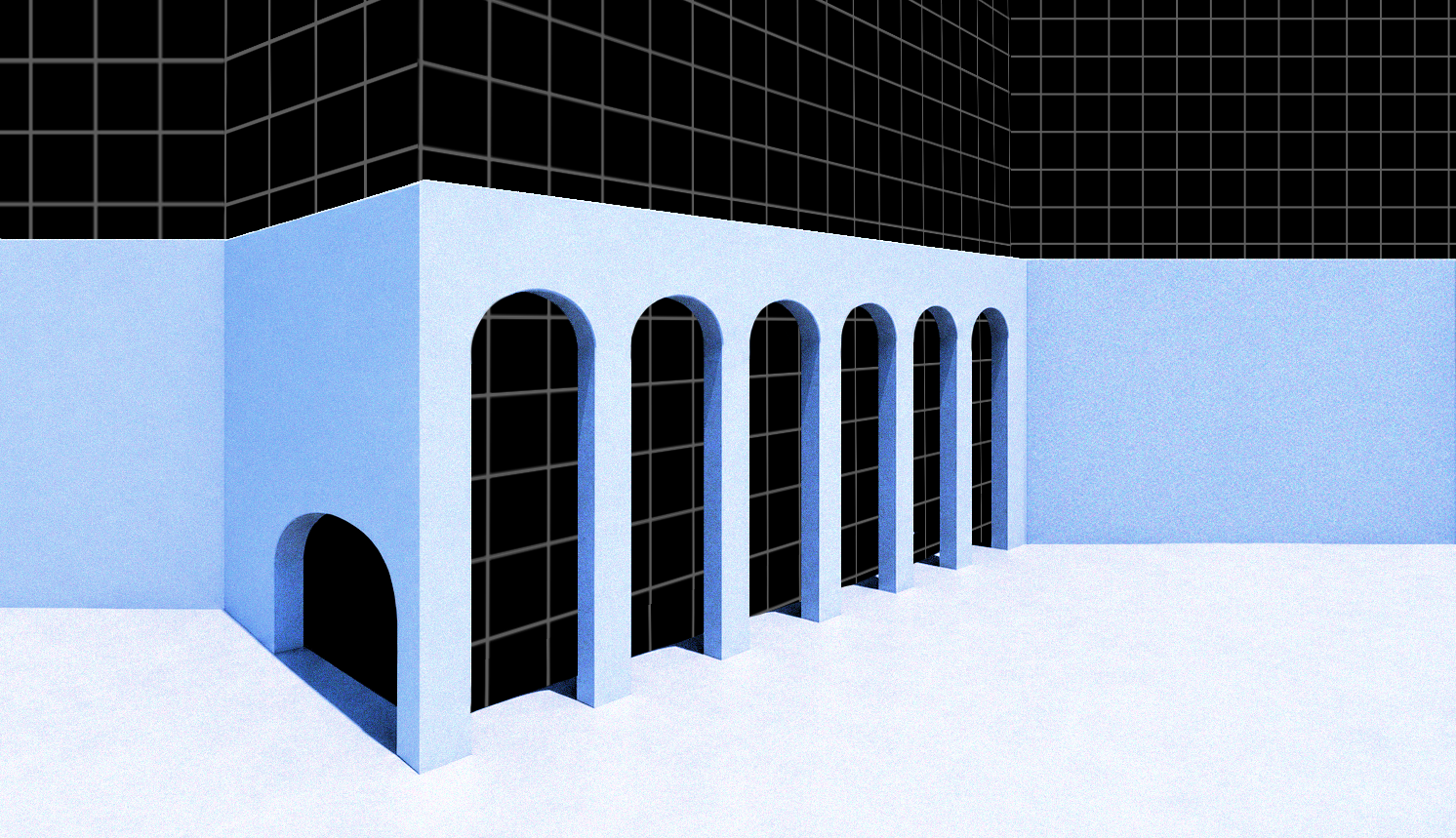
The grid is not decoration and not a backdrop pattern to be cropped casually. It should always read as structural: the architecture stands on it, and openings reveal it.
The architecture
Extraordinary, surrealist architecture: arches, colonnades, rotundas and courtyards, impossible structures rendered calm and empty, in the liminal-dreamcore register. This is what runs on the kernel: the extraordinary things people build with BrowserPod, standing on the grid that supports them.
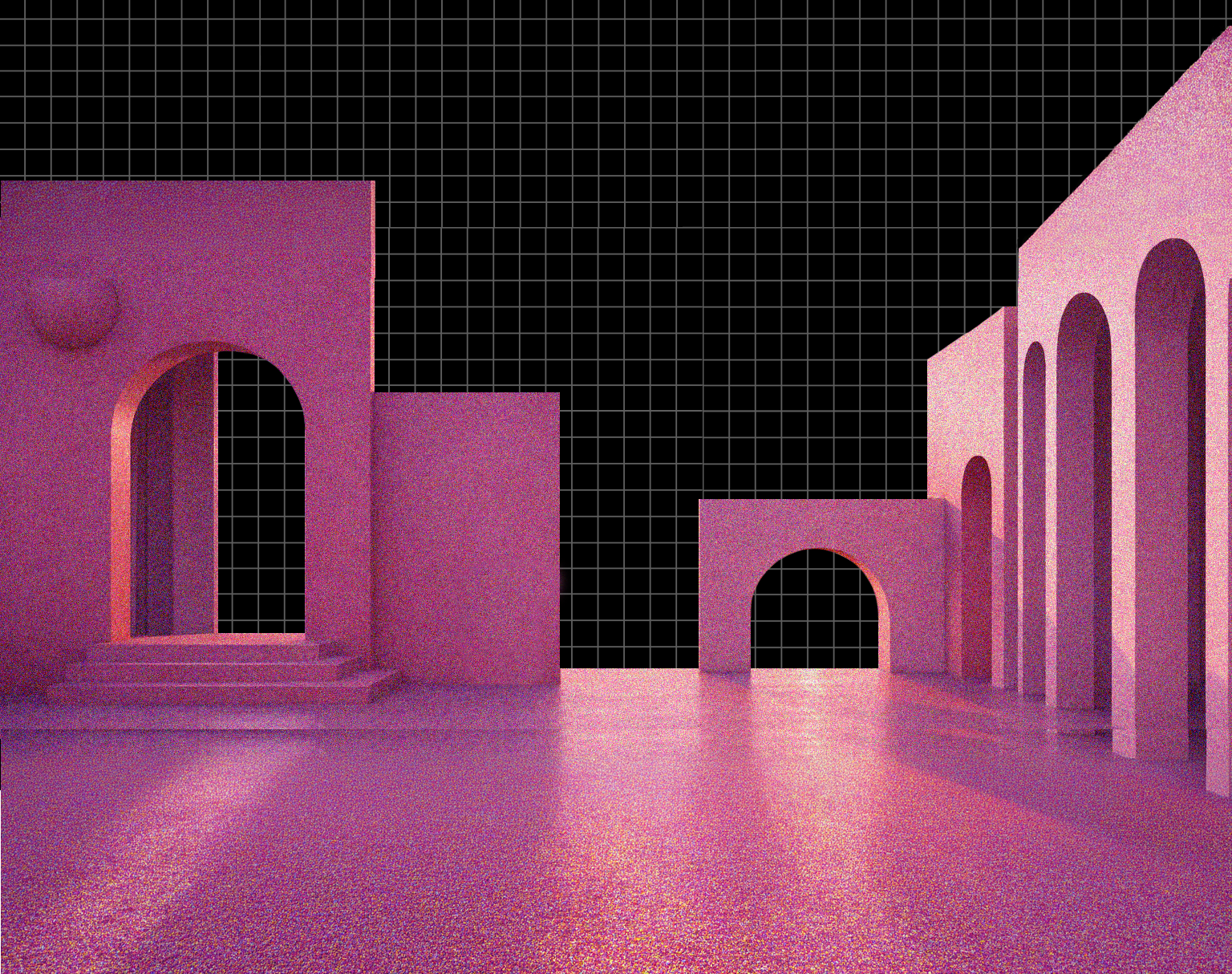
Composition notes:
- Scenes are empty of people. Liminal spaces are thresholds waiting to be crossed.
- Each scene holds a single hue family (powder blue, peach, pink-violet), used flat, with light doing the modelling. Layout and UI stay on the core palette; scene monochromes are for imagery.
- Structures repeat their own elements: rows of arches, nested openings, mirrored forms. This is the pattern logic made visible.
Doors
Doorways, arches and openings recur everywhere in the world, and they always mean the same thing: Portals, BrowserPod’s URLs, generated via websocket, that listen on ports and become links anyone can open. A Portal is a door into a running machine, so the imagery treats every door as an event: it opens onto the void grid, onto a sky, onto somewhere that shouldn’t be on the other side.
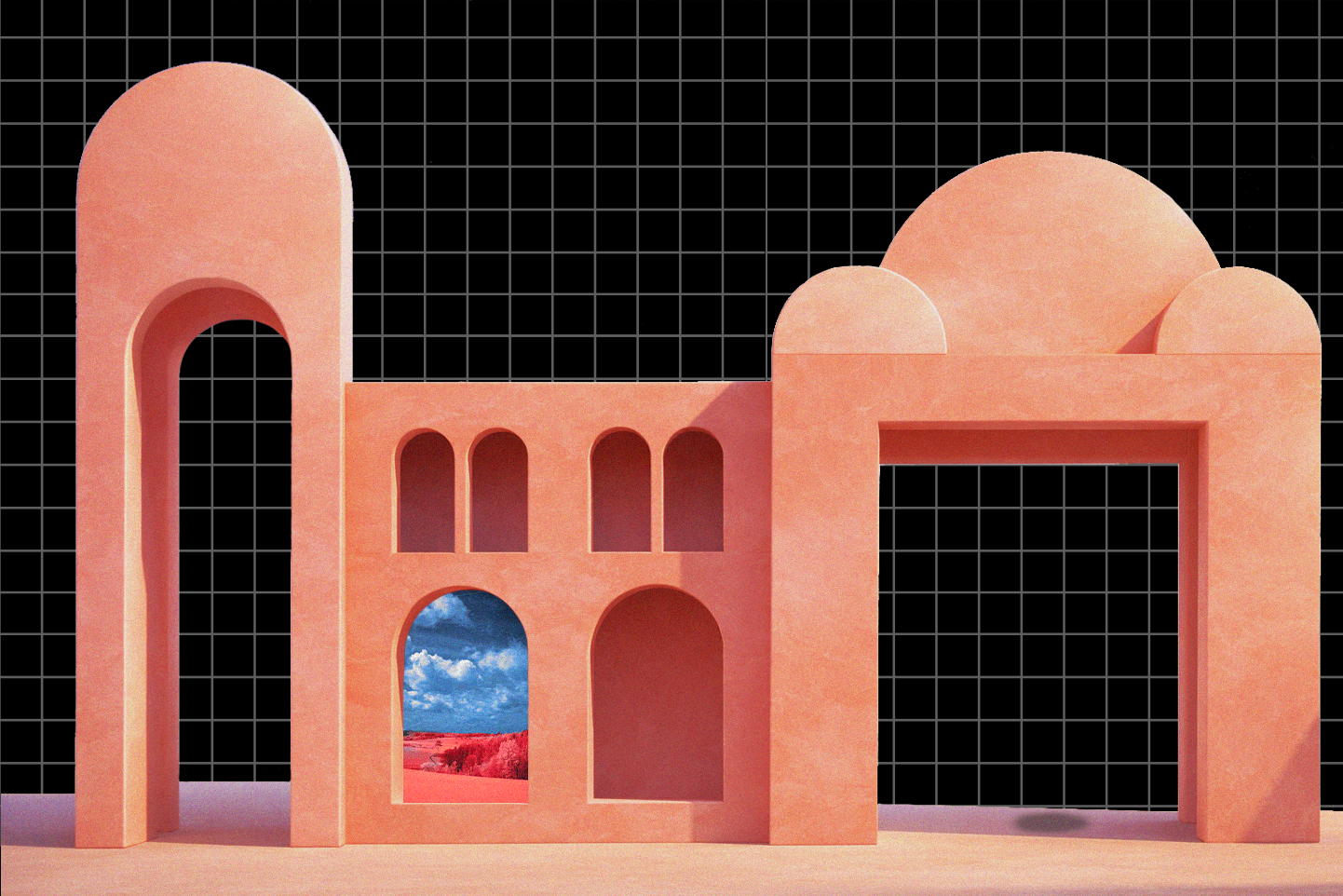
When illustrating Portals specifically, the door is the hero: centred, glowing with borrowed light, or revealing the grid beyond.
Early-2000s 3D
The render style deliberately references early-2000s 3D: simple geometry, soft global light, gentle film grain, a little naivety. This is not retro for its own sake. It points at an era when compute was close to the user, before everything moved to someone else’s datacenter. BrowserPod brings that back, and the imagery should feel like remembering it.
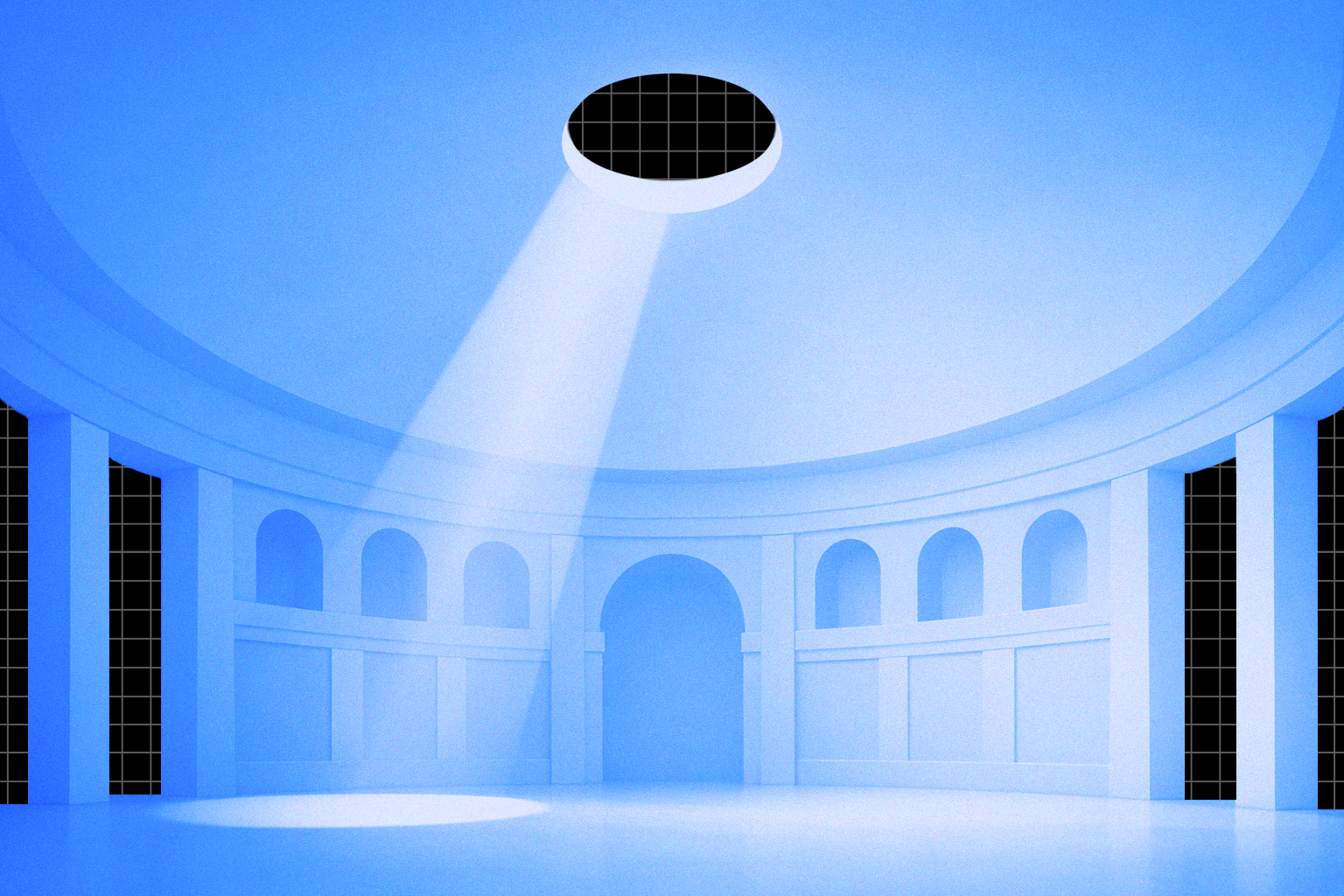
Craft rules: modest polygon counts and simple materials over photorealism; grain over gloss; flat fields of color modelled by light, never gradients.
The Diorama
All of this architecture belongs to one wider brand project: the Diorama, a grand city built on the BrowserPod grid. The grid here is a large warping mesh representing the kernel: it does not just sit under the city, it warps upward into the shapes of the architecture itself. Kernel and city are one continuous surface: the platform literally becomes what people build on it.
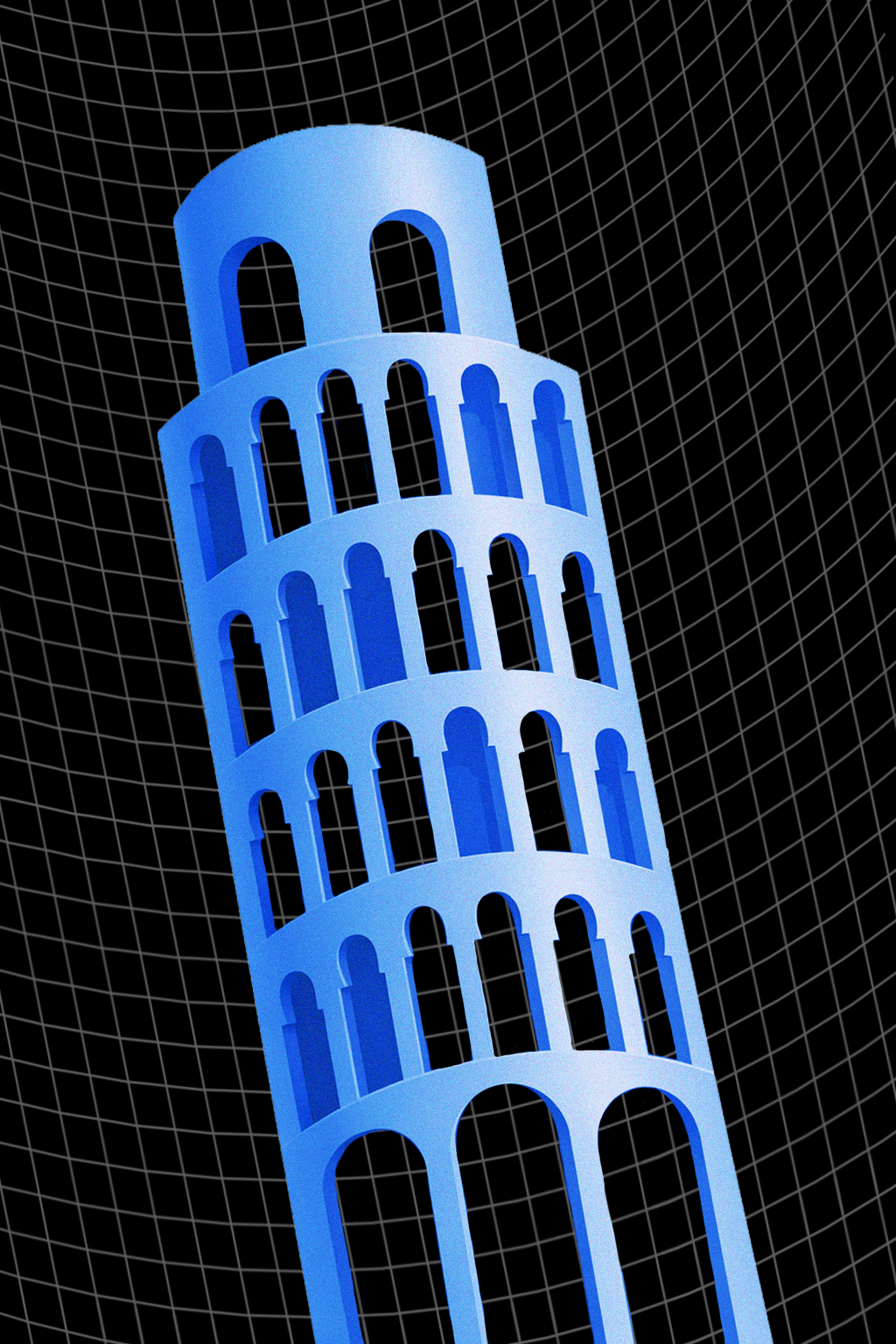
Every scene we publish is a view of the Diorama. New imagery should be composed as if photographed somewhere inside this one city, so the world stays continuous across every touchpoint.